


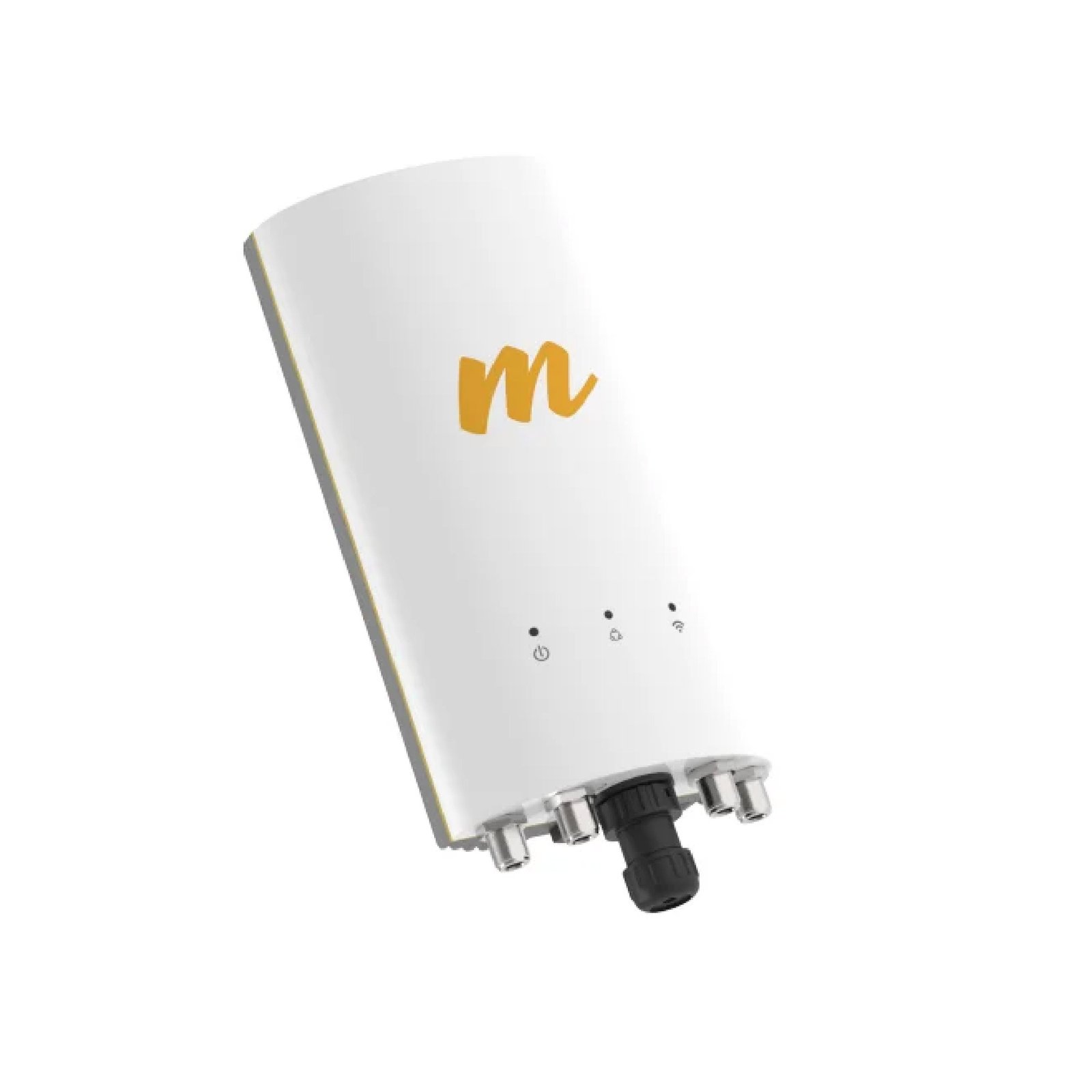
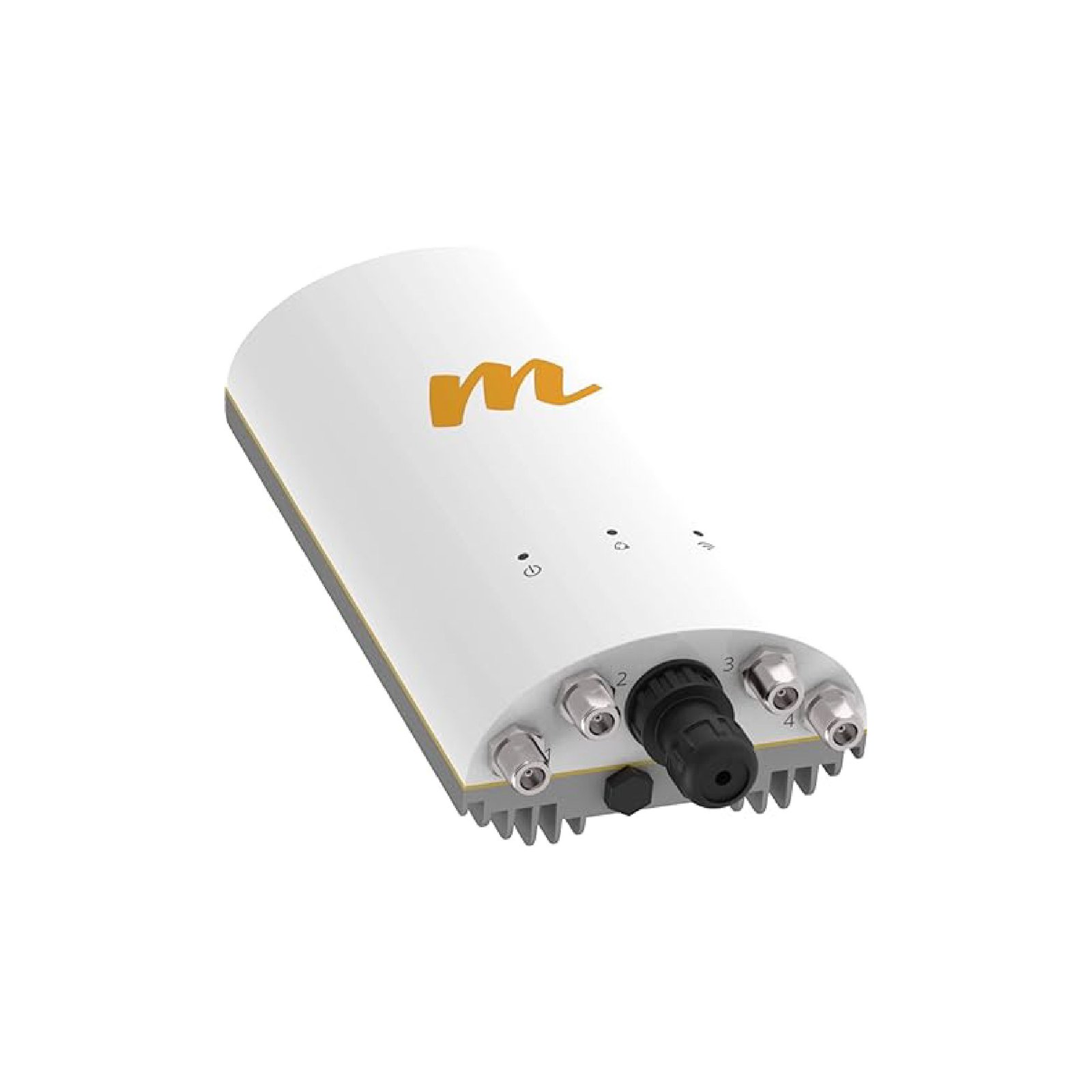
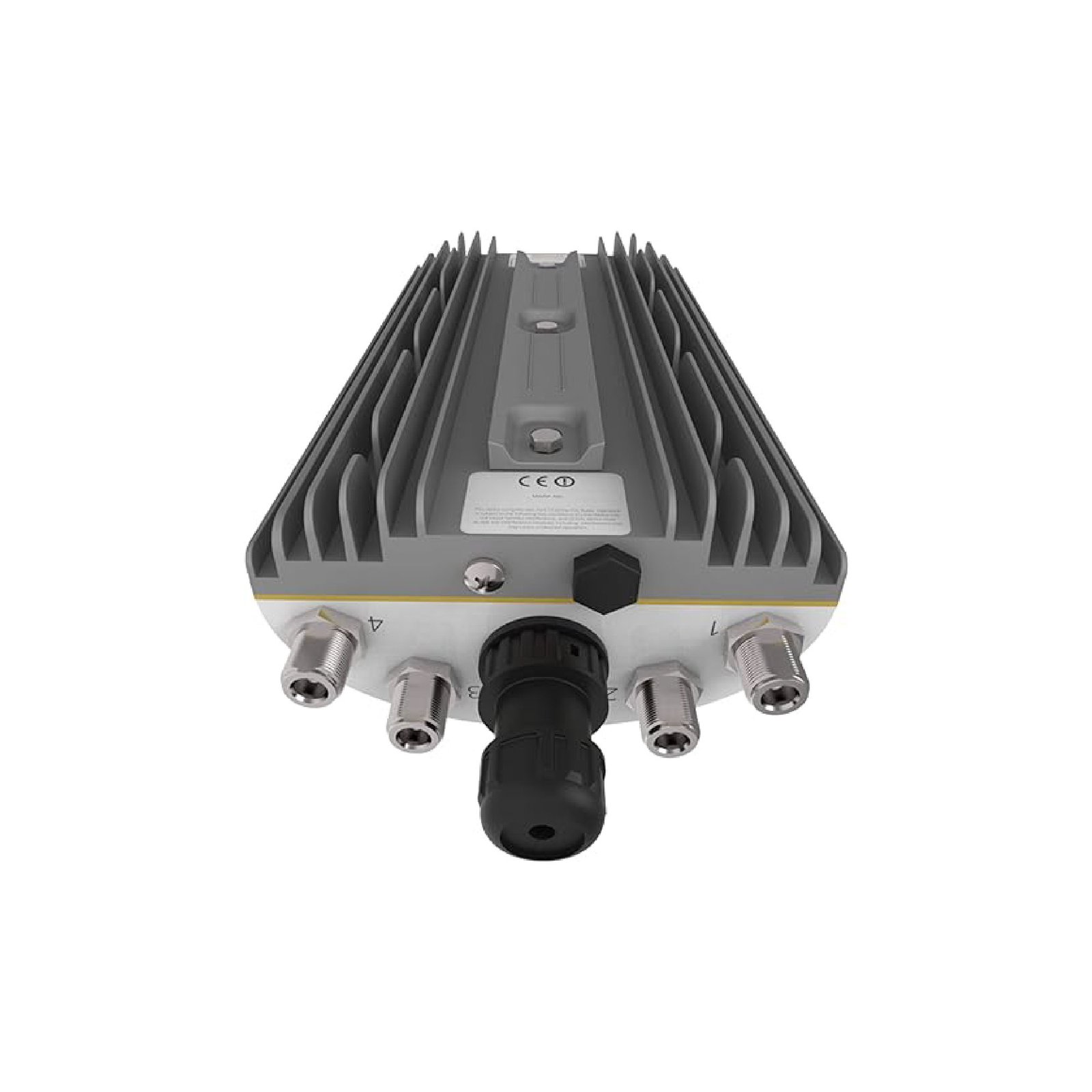

With customer speeds capable of over 500 Mbps and access point capacity of up to 1.5 Gbps, it delivers the speeds demanded by consumers and business users at a fraction of the cost of on-premises fiber delivery.
The Mimosa N5-360 antenna is designed to pair exclusively with the Mimosa A5c access point and incorporates four-panel, overlapping 180-degree vertical and horizontal antenna polarizations. The antenna's innovative design boosts performance by providing balanced, dual-flow coverage across 360 degrees of azimuth, leveraging beamforming gain and extending the MicroPoP deployment range by up to 60% compared to Mimosa's integrated A5 solution. Responding to customer demand for an extended frequency range, the N5-360 operates from 4.9 GHz to 6.4 GHz without compromising performance.
Automatic provisioning, along with the Mimosa installation application, now dramatically reduces subscriber installation time, automates device provisioning, and enables seamless device integration into an ISP network.
With integrated high-precision GPS synchronization technology, new A5c sectors can be easily added to the existing deployed Mimosa A5 and B5 site and reuse the same channel. This saves valuable and scarce unlicensed spectrum resources when new A5c devices need to be installed back-to-back on the same tower or pole.
The unique, integrated high-precision GPS synchronization technology in every Mimosa A5c allows all deployed devices to collaboratively synchronize across the entire network. This enables easy channel reuse to save valuable spectrum across the network and, together with Mimosa Cloud, makes it incredibly easy to deploy and optimize network spectrum usage and performance across all your deployed devices.
Time-division multiplexing (TDMA) techniques have proven to offer significant improvements when scaling the number of clients, compared to the carrier-sense approaches used in Wi-Fi technologies. When further optimized through dynamic allocation of time slots and support for multi-user MIMO in the downstream direction, and on-demand allocation of upstream time slots, network scale, spectrum efficiency, and access point utilization are maximized.

Reviews
There are no reviews yet.